
Work-Life Balance: How to Manage Stress Without Burning Out
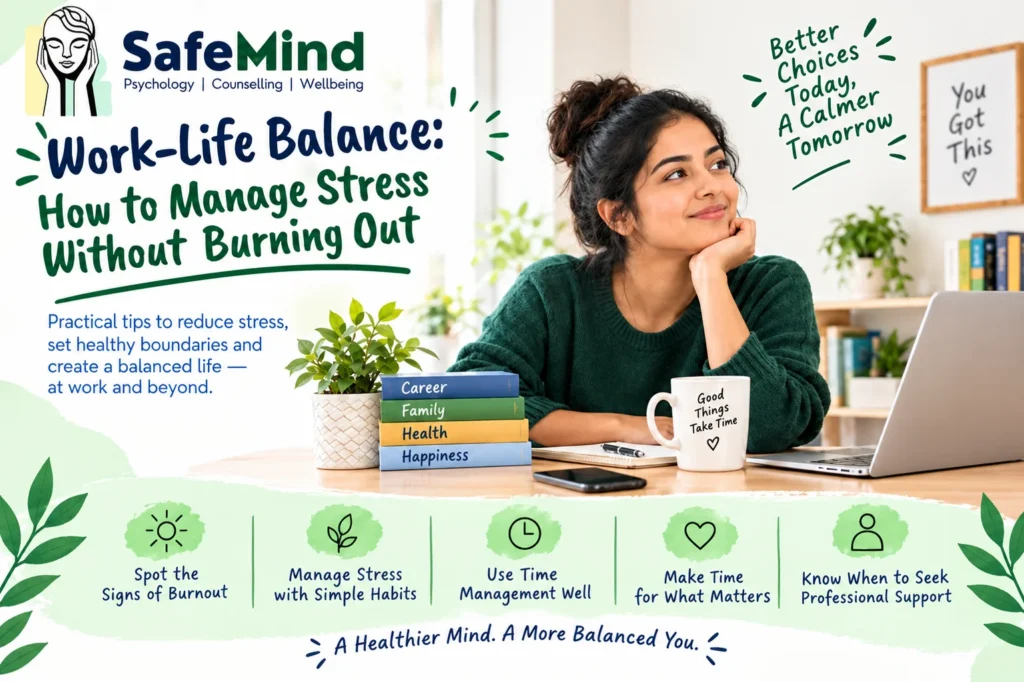
Work-Life Balance: How to Manage Stress Without Burning Out
Summary
Work pressure, long working hours and personal responsibilities can make it hard to maintain a healthy work life balance. This blog covers the signs of burnout, ways to manage stress and when professional support may help. It also explains what to look for when choosing a psychologist in Pune.
Work can slowly take over your life without you realising it. A few extra hours at the office become part of your daily routine. Messages keep coming after work, weekends are spent catching up on unfinished tasks, and even time with family starts to feel rushed. After a while, all this can affect your peace of mind.
A healthy work-life balance does not mean spending the same number of hours at work and at home. It means managing your responsibilities without feeling tired and overwhelmed all the time. Knowing how to manage work stress, using Time management effectively and recognising the early signs of burnout can help you understand when something needs to change.
Why Is Work-Life Balance Important?
Work can be rewarding, especially when you enjoy what you do or want to move ahead in your career. Problems arise when there is little time left for rest, family or the things you enjoy outside work.
When you do not get enough time to rest, even simple tasks can start to feel difficult. You may find it hard to concentrate, lose patience with people around you or keep thinking about work long after the working day has ended.
Poor work-life balance is not always about working long hours. Sometimes, the problem is that you never really switch off from work. You might be with your family but thinking about the next deadline, or checking emails during dinner because you are worried about missing something.
Time management can help you organise your day, but it cannot solve every problem. If your workload is consistently unrealistic, you may also need to discuss expectations with your manager. Making room for rest helps you manage your responsibilities without letting work take over every part of your life.
What Are the Common Signs of Burnout?
The World Health Organization describes burnout as an occupational phenomenon linked to chronic workplace stress that has not been successfully managed. It involves exhaustion, increased mental distance or negativity towards work, and reduced professional effectiveness.
Recognising the signs of burnout can help you notice when your usual routine may no longer be working for you.
1. You Feel Tired Even After Resting
You may wake up feeling tired, struggle to get through the working day or find that weekends do not leave you feeling refreshed. If this continues and affects your daily life, it is worth paying attention to.
2. Small Tasks Start Feeling Difficult
Replying to emails, making decisions or finishing familiar tasks may take more effort than usual. You might put things off or struggle to concentrate even when you want to get your work done.
3. You Become Irritated or Lose Interest in Work
Work that once interested you may start feeling like a burden. You may become impatient with colleagues, lose motivation or feel disconnected from your responsibilities.
4. Your Personal Life Starts to Suffer
You may cancel plans, avoid conversations or stop making time for activities you once enjoyed. By the end of the day, you may have little energy left for family or friends.
These experiences do not always mean you have burnout, as they can have different causes. If exhaustion or changes in mood continue, consider speaking with a qualified professional.
How to Manage Work Stress Before It Builds Up
You do not have to change your entire routine at once. Small changes can make your day easier to manage. The most useful stress management techniques are the ones that fit into your life and are realistic enough to follow regularly.
1. Set Boundaries Around Working Hours
Decide when your working day should end. Where possible, avoid checking work messages after hours. If your job requires you to be available outside regular hours, discuss clear expectations with your manager.
Setting boundaries at work can start with something simple, such as taking your lunch break or explaining when you cannot finish another task within the available time.
2. Plan Your Day Around Important Tasks
A long to-do list can make everything seem urgent. Good Time management starts with identifying your priority tasks. Decide which two or three tasks need your attention first, break larger assignments into smaller steps and leave some time for unexpected work.
If there is regularly more work than you can finish, speak to your manager about your priority tasks and workload instead of trying to complete everything by staying late.
3. Take Short Breaks During the Day
Working continuously can make it harder to concentrate. Step away from your screen, stretch, drink water or take a short walk when your schedule allows. Even a few minutes away from your desk can give you some breathing room between tasks.
4. Make Time for Life Outside Work
Spend time doing things that have nothing to do with your job. You could call a friend, spend time with family, read or go outside for a while. Your free time does not have to be productive. You do not need to turn every evening into another list of tasks to complete.
5. Protect Your Sleep Routine
Late nights at work and irregular sleeping hours can make daily stress harder to manage. Try to follow a reasonably consistent bedtime and give yourself time to relax before sleeping. If you keep thinking about work at night, writing down the tasks you need to handle the next day may help you leave them until morning.
6. Find Out What Is Causing the Pressure
When stress becomes part of everyday life, it is easy to think you simply need to handle it better. But sometimes the problem is the situation itself. Consider whether deadlines are unrealistic, expectations are unclear or you are taking on more work than you can manage.
Understanding the cause can help you decide whether to adjust your routine, speak to your manager or ask for support. If stress is affecting your everyday life, Psychology Counselling is one of the services offered by SafeMind. The website describes its therapeutic approach as including CBT, mindfulness and journaling tools.
Work-Life Balance Tips That Are Realistic to Follow
Advice about work-life balance can sound simple when you are dealing with deadlines, household responsibilities and limited free time. You do not need a perfect routine. Start with a few work-life balance tips that suit your daily life.
- Start with one boundary: Choose something simple, such as not checking work emails during dinner.
- Keep your evenings manageable: Do not fill every free hour with chores or unfinished work.
- Make time for breaks: Take short breaks instead of waiting until you feel exhausted.
- Talk about your workload: Ask your manager to help decide which tasks need attention first.
- Review your routine each week: Use Time management to see how you spend your day and where you need more breathing room.
- Ask for help when needed: You do not have to manage every responsibility alone.
A routine that works for one person may not work for another. Review your priority tasks regularly and adjust your schedule when needed. The aim is not to follow every tip perfectly, but to find a way of managing your responsibilities that you can maintain over time.
Work pressure can sometimes affect relationships outside the office, too. If it starts creating difficulties between partners, Couples Therapy is another service listed by SafeMind. Relationship Counseling may also be relevant for people looking for support with relationship concerns. These services address different needs, so the appropriate option depends on the situation.
When Should You Seek Professional Support for Work-Related Stress?
Sometimes, changing your routine is not enough. If stress continues to affect your sleep, relationships, concentration or everyday activities, speaking with a qualified mental health professional may help.
People looking for stress management counselling in Pune or counselling for work-related stress in Pune may want help understanding what is causing their stress and finding ways to deal with it.
If you are looking for a psychologist in Pune, check their qualifications, experience and areas of expertise. Ask about the support they offer and whether they provide online or in-person sessions. It is also important to feel comfortable talking to the professional you choose.
When searching for the best psychologist in Pune, do not rely only on online ratings or promotional claims. Check the professional’s credentials, experience with your concerns and the services they provide. If you are considering a therapist in Pune, check their training and experience with work-related stress.
SafeMind lists Psychologist, Psychology Counselling and Therapist among its services. You can review the available options on the SafeMind services page to learn more about its approach and the support it offers. If you are looking for counselling services in Balewadi, check the available information and confirm which service best fits your needs.
SafeMind also offers Online Counselling and In-Person Counselling. Online sessions may be suitable for busy professionals who find it difficult to travel, while in-person sessions take place at its Pune studio. You can ask about online counselling for work-related stress if remote sessions would work better with your schedule.
What Is the Difference Between a Psychologist and a Psychiatrist?
Psychologists and psychiatrists have different training and professional roles. A psychologist may provide psychological assessment and therapy within their qualifications. A psychiatrist is a medical doctor who specialises in mental health and can assess whether medical treatment, including medication, may be appropriate.
If you are searching for a psychiatrist in Baner, Pune, discuss your concerns with a qualified healthcare professional. They can help you understand which type of support may be suitable. Seeking professional help does not mean you have failed to manage stress. It can help you understand what you are experiencing and consider what might help.
A Healthier Work-Life Balance Starts With Small Changes
You should not wait until you are completely exhausted by stress. Pay attention to how you feel, make time for rest and identify the signs of burnout before they start affecting your life.
Start with one manageable change. Use Time management to organise your day, identify your priority tasks, set a boundary, take a proper break or talk honestly about your workload. If stress continues to affect your everyday life, consider speaking with a qualified professional.
A healthy work-life balance does not mean getting everything right every day. It means making room for work, health, relationships and the things that matter to you outside your job.
Frequently Asked Questions
1. How Do I Find the Best Psychologist in Pune?
When looking for the best psychologist in Pune, consider their qualifications, experience with your concerns and approach to therapy. Checking their credentials and understanding the services they offer can help you make an informed choice.
2. What Are the Fees for a Psychologist in Pune?
The fees for a psychologist in Pune depend on their qualifications, experience, session duration and whether the consultation is online or in person. Prices vary between providers, so contact the professional directly to confirm the current consultation fees before booking.
3. How Do You Maintain a Healthy Work-Life Balance?
Maintaining a healthy work-life balance starts with setting realistic working hours, planning your day, identifying priority tasks and making time for yourself and personal relationships. Setting boundaries around work messages and discussing an unmanageable workload with your manager can also help.
4. What Are the Symptoms of Burnout?
Common symptoms of burnout include ongoing exhaustion, feeling disconnected or negative about work, reduced motivation and difficulty completing everyday tasks. These symptoms can have other causes, so speak with a qualified professional if they continue.
5. What Is the Difference Between Stress and Burnout?
Stress often involves feeling overwhelmed by demands and responsibilities. Burnout is associated with chronic workplace stress that has not been successfully managed. It can involve exhaustion, mental distance from work and reduced professional effectiveness.
6. Can Counselling Help With Work-Related Stress?
Counselling may help you understand what is causing your stress, develop ways to manage it and work through concerns affecting your professional or personal life. The right type of support depends on your circumstances and the qualifications of the professional you consult.